Rare Endocrinology News
Spotlight On
Adrenoleukodystrophy
Adrenoleukodystrophy is a genetic condition that damages the myelin sheath that covers nerve cells in the brain and spinal cord
Prevalence
1 / 17 000
1 - 15,000
US Estimated
1 - 15,000
Europe Estimated
Age of Onset
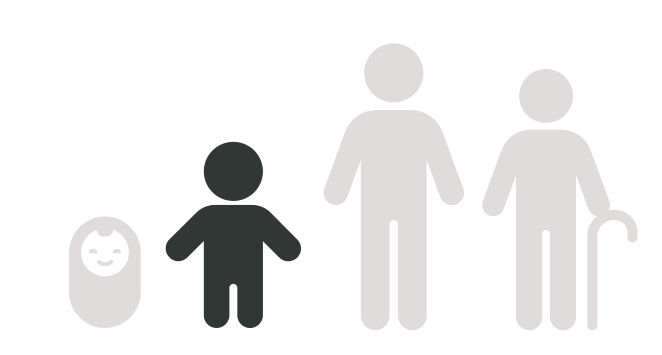
Childhood
ICD-10
E71.52
Inheritance Pattern
Autosomal dominant
Autosomal recessive
Mitochondrial/Multigenic
X-linked dominant
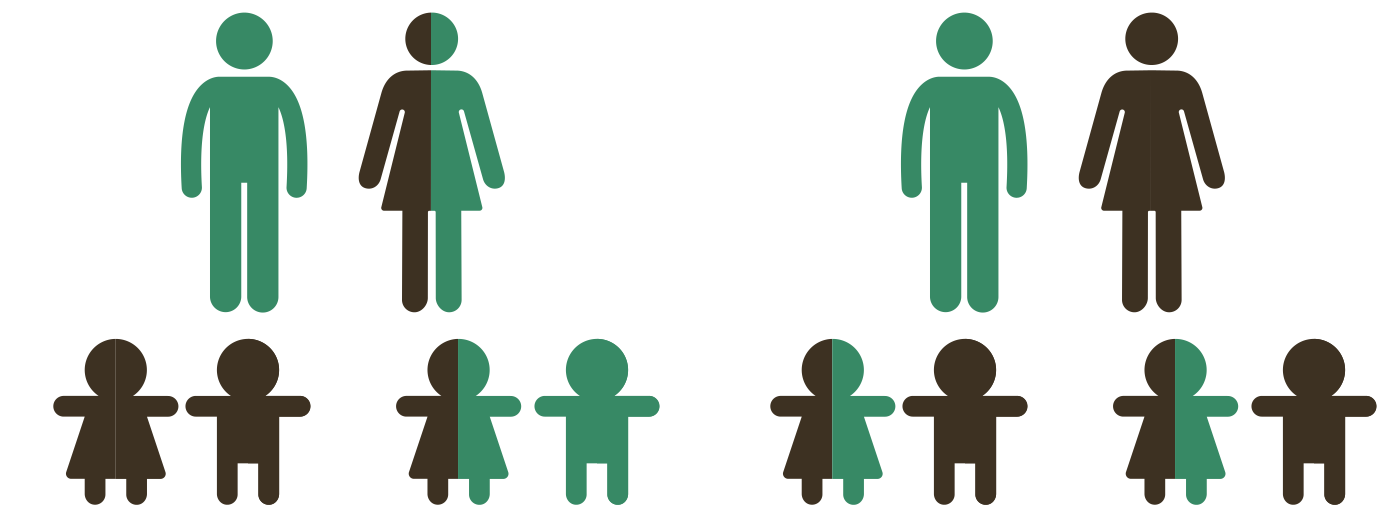
X-linked recessive
Rare View
A genetic disorder affecting the metabolism of very long-chain fatty acids, leading to progressive damage to the myelin sheath in the nervous system and adrenal gland dysfunction. It primarily affects males and can present in childhood or adulthood.

5 Facts you should know
FACT
Long chain fatty acid buildup causes damage to the myelin sheath of the nerves of the brain, resulting in seizures and hyperactivity
FACT
The most severely affected tissues are the myelin in the central nervous system, the adrenal cortex, and the Leydig cells in the testes
FACT
Approximately two-thirds of ALD patients will present with the childhood cerebral form of the disease, which is the most severe form
FACT
Initial symptoms in boys affected with the childhood cerebral form of ALD include emotional instability, hyperactivity, and disruptive behavior at school
FACT
The severe form is characterized by normal development in early childhood, followed by rapid degeneration to a vegetative state
Interest over time
Google searches
Common signs & symptoms
Endocrine
- Fatigue
- Weight loss
- Hyperpigmentation
- Hypoglycemia
Adult form (AMN)
- Progressive spastic paraparesis
- Gait abnormalities
- Peripheral neuropathy
Neurologic
- Behavioral changes
- Cognitive decline
- Loss of vision or hearing
- Seizures
- Progressive motor dysfunction
Current treatments
Adrenal hormone replacement when adrenal insufficiency present
For early active cerebral ALD
Allogeneic HSCT can arrest progression when performed early 
Gene therapy
SKYSONA (elivaldogene autotemcel) is FDA-indicated for boys 4–17 with early active cerebral ALD without a suitable matched donor
Supportive multidisciplinary care for AMN/neurologic disability
References:
Moser HW, Smith KD, Watkins PA, Powers J, Moser AB. X-linked adrenoleukodystrophy. <i>In: GeneReviews®.</i> University of Washington, Seattle; updated 2022. — Comprehensive overview of genetics, clinical phenotypes, diagnosis, and management. Engelen M, Kemp S, de Visser M, et al. X-linked adrenoleukodystrophy (X-ALD): clinical presentation and guidelines for diagnosis, follow-up and management. <i>Orphanet J Rare Dis.</i> 2012;7:51. doi:10.1186/1750-1172-7-51 Moser HW, Mahmood A, Raymond GV. X-linked adrenoleukodystrophy. <i>Nat Clin Pract Neurol.</i> 2007;3(3):140–151. doi:10.1038/ncpneuro0421 Mallack EJ, Turk BR, Yan H, et al. MRI surveillance of boys with X-linked adrenoleukodystrophy identified by newborn screening. <i>Neurology.</i> 2021;97(5):e413–e423. doi:10.1212/WNL.0000000000012319 Eichler F, Duncan C, Musolino PL, et al. Hematopoietic stem-cell gene therapy for cerebral adrenoleukodystrophy. <i>N Engl J Med.</i> 2017;377(17):1630–1638. doi:10.1056/NEJMoa1700554